

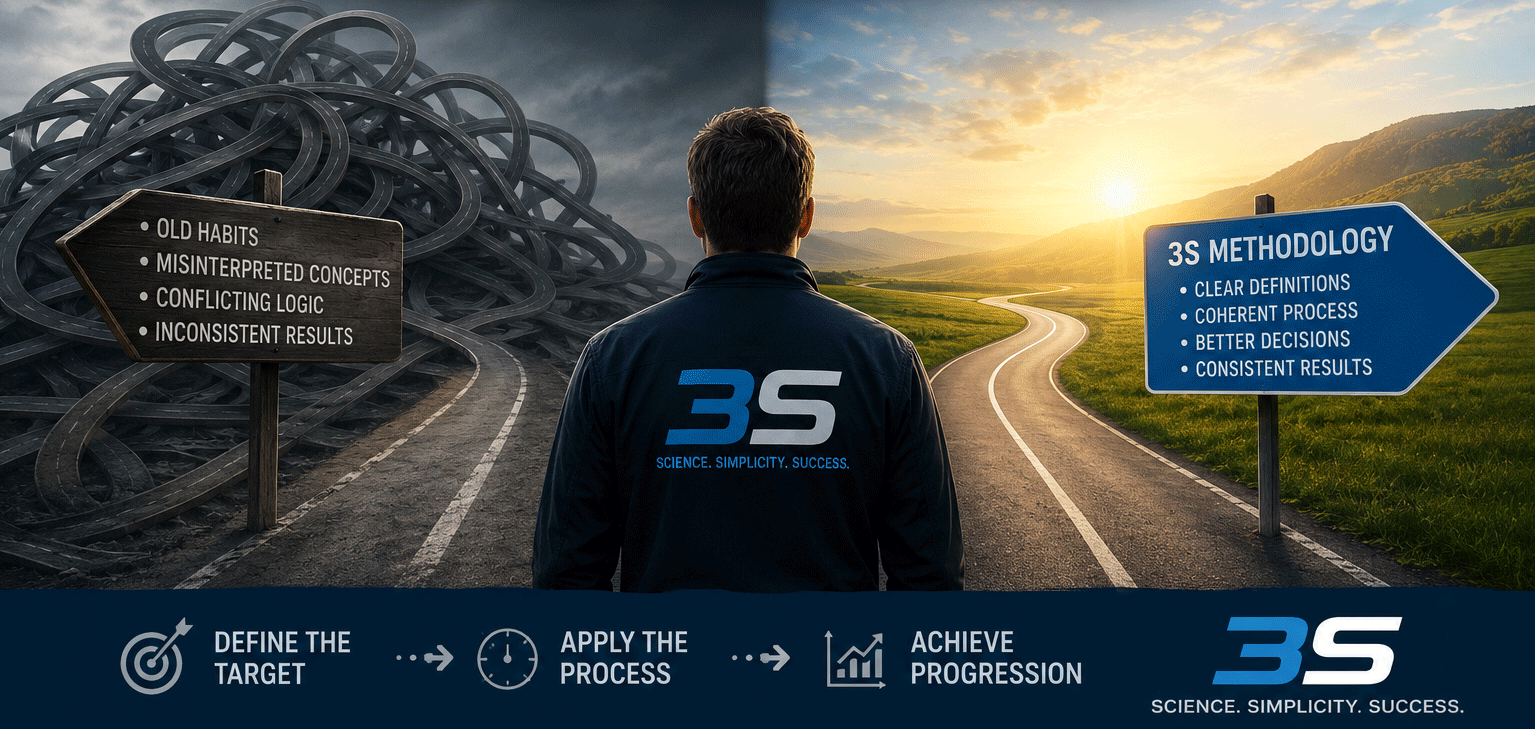
By Sergei Beliaev, Founder of Super Sport Systems, and Rich Rogers, Head Coach and Executive Director of Edina Swim Club
Foreward by Rich Rogers, Head Coach and Executive Director of Edina Swim Club
Every coach faces the same challenge: how do we turn an athlete’s potential into a performance on the day it matters most? We can all write a demanding workout. The harder questions are which physiological adaptation we need, how fast each athlete should swim, how much work is appropriate and how those prescriptions should change as the season progresses.
The article first examines the scientific framework for managing training as a process, then connects those principles to decisions made every day on the pool deck; from planning a season and prescribing individual velocities to designing sets and responding when a swimmer cannot hit the target. The purpose is to show how scientific methodology and practical coaching judgment work together.
For coaches who want to explore these principles beyond the article, a special opportunity is presented at the conclusion: a complimentary three-month trial of the 3S Training Design Platform, including personalized assistance to get started with their own athletes.
Why This Matters to Coaches
By Sergei Beliaev, Founder of Super Sport Systems
The coaching profession demands command of many skills, some critical, others supplementary. However, if shaping athletes’ performance and producing winners is a priority, coaches need to master the principles of training—or, more precisely, the methodology of sports training.
This article is about the future of sports training: how we understand training, how we apply it, and what it should ideally represent.
Sports Training Science Today
We admire record performances and praise the coaches who nurture talent and bring it to its peak. As competition advances, we wonder where human limits lie and what training protocols help athletes reach them.
It would be reasonable to assume that the knowledge accumulated by generations of legendary coaches—James Counsilman, George Haines, Jon Urbanchek, Richard Quick, and many others—is well documented, readily accessible, and available for new generations to study and apply.
But, for some reason, this is not the case. While successful coaches often share their stories at forums and coaching clinics, we still cannot reconstruct and reuse the specific protocols and patterns that led to their success. Have you ever wondered why?
In our analysis, the explanation lies in the two concepts that dominate sports training science today: Periodization and Anaerobic Threshold. Although built on different criteria, both lack the framework needed to describe, design, and preserve the logic of success.
These concepts were originally developed to solve different problems:
- Periodization suggested a cyclic approach to load distribution.
- Anaerobic Threshold offered a method for determining intensities and training focus based on lactate responses.
Both approaches became institutionalized and dogmatized. Both were later criticized by their creators for misuse and misrepresentation. Yet the industry largely ignored those criticisms, continuing to defend established concepts rather than address their limitations. This resistance also made it difficult for new ideas to enter the field. Neither concept was designed to address the larger task of managing the training process.
In their defense, both emerged before organizing and optimizing training as a process became a central concern of training science. They filled a void in the young discipline’s attempts to reproduce peak performance from season to season, but neither was intended to explain and manage the process as a whole.
Interestingly, while the central challenge of training science, defined as Intelligent Management of the Training Process, emerged in the early 1980s, dominant training practices continued to center on manipulating cycles and interpreting isolated physiological responses as accepted coaching standards, continuing to ignore the notion of training process management.
Mainstream practice remained locked into existing concepts, despite the clear fact that organizing the training process required a different paradigm and thinking beyond them.
The distinction is fundamental: physiology explains what happens in response to physical stress. Sports training methodology addresses how to organize training to achieve a desired result.
Contemporary Views on the Organization and Intelligent Management of Training
The situation in training science has not changed much over the last forty years: researchers identified the direction of sports training methodology, but the dominant training concepts were not equipped to provide a satisfactory solution.
The emergence of the Parametric Training Concept, proposed and studied by Dr. Sergei Gordon and his school in the late 1970s, signaled a shift but remained largely ignored worldwide. It was among the first concepts to formally challenge periodization, offer a different angle for studying physiological responses under different training formats, and provide different criteria for organizing training as a process.
For the first time, parametric studies connected longitudinal performance progression with adaptation and defined it through adaptation constants, adding a quantifiable dimension to progression in response to different training strategies.
Physiological responses remained integral to this approach. They served as markers of reaction to standard training loads and intensities, helping explain and direct adaptation.
This knowledge established a foundation for programming training around athletes’ specific abilities and goals. A universal energy model of performance provided a way to describe those abilities across sports.
The season was envisioned as an operational expression of the loads and intensities required to produce specific adaptations under different strategies.
These elements found a common connection in time—the unifying criterion of the framework later formalized as the Ergometric Training Concept (ETC).
Viewing training as a process evolving over time introduced another dimension: how the athlete’s condition and training requirements change throughout preparation. Time connects the individual elements of that process. It describes performance over a competition distance, the duration over which different energy-production mechanisms sustain power, the duration required for effective training exercises, and the progression of adaptation.
Time therefore serves as both a dimension of the training process and a unifying criterion within it. The athlete’s initial condition, intended results, training zones, sets, and paces can be connected within one framework and strategically organized throughout the season.
From Theory to Practical Implementation: The Rise of Super Sport Systems
These progressive ideas required a working system that could quantify their relationships and calculate dynamic training targets in response to different inputs.
The task was to translate research findings about adaptation into a mathematical model and algorithms that any coach or user could apply in a real training environment. That is exactly the problem the founders of Super Sport Systems set out to solve.
Once training is viewed as a managed process, preparation can be designed for a specific outcome. Each effort can be connected with its expected physiological response and assigned its place in the season, week, and day. Programming the intended progression establishes a foundation for controlling and managing the process itself.
Applying these relationships consistently across a group of athletes, with prescriptions changing throughout the season, requires computational support. The scientific framework, formulated by Dr. Sergei Beliaev, establishes what needs to be calculated, while 3S algorithms provide the means to apply it in daily coaching.
What This Shift Means for Coaches
The distinction becomes clear when we move from general explanations of training to the practical task of selecting daily loads, sets, paces, and workouts. Training decisions without a coherent, all-inclusive model rely on intuition and experience. Coaches may offer convincing accounts of physiological demands, yet their reasoning quickly dissolves into guesswork without a proven connection between the elements. 3S removes guesswork from these prescriptions, calculating every key training parameter with surgical precision to match the changing needs of each athlete or group according to season logic and design.
The harsh reality is that the existing concepts do not provide a sound model connecting the athlete’s ongoing development with the training required to achieve a planned result months from today.
The Ergometric Training Concept is a new training paradigm that supersedes previous concepts while building on their contributions. It approaches the management of training through individual adaptation across different functional abilities.
Different energy-production mechanisms require specific conditions for development. Their contribution to the athlete’s performance determines what needs to be developed, in what sequence, how, and to what degree in relation to the others. The season plan therefore defines the development strategy and the logic of the necessary progression.
Control training sets allow coaches to follow ergometric progression daily and assess whether development is moving in the intended direction.
The professional objective becomes managing adaptation necessary to support the desired performance.
From Scientific Framework to Daily Practice
The 3S Training Design Platform is the operational expression of ETC. It processes these relationships in the background and delivers calculated recommendations that coaches can apply—from season construction and weekly loads to individual workout targets.
For a coach, this means knowing what work your swimmers need this week, how much belongs in each zone, and which individual targets should guide their efforts. As preparation progresses, those prescriptions change with it. You can build practices around calculated requirements, bring your preferred sets into the plan, and give swimmers training together targets appropriate to their individual progression.
Coaches can benefit from these capabilities before mastering the underlying theory. Their understanding can grow through practical use, supported by educational materials and tutorials.
For experienced coaches, the opportunity is to bring accumulated knowledge and skills into a scientific framework that raises their application to a higher level. Creativity, technical instruction, and knowledge of athletes remain central to coaching. They now work alongside calculations that connect daily decisions with the direction of preparation.
Putting this framework to work also involves learning how to use its recommendations in everyday coaching. Coach Rich Rogers brings that practical perspective: how to understand the prescriptions, organize a group around individual targets, and bring a coach’s own knowledge and creativity into the process.
From Science to the Pool Deck: Practical Application
A practical coach’s perspective—Rich Rogers
Experienced coaches know how hard their colleagues work and how deeply they care about their swimmers. In the desire to do more, it is easy to believe that more training or faster swimming must somehow produce better results. Yet a demanding workout is not necessarily an effective one; its value lies in the adaptation it is designed to create.
The real questions are when to do more; what type of work to prescribe; how fast each swimmer should swim; how much actual work is needed and what recovery will preserve the intended training effect. Those answers change throughout the season.
Working with 3S means bringing those answers together while keeping the coach, and the swimmer, at the center of the process.
Begin with the Athlete and the Destination
Start with a credible previous performance, a realistic championship goal, and an appropriate starting point for the season.
A swimmer returning after a short break may begin in a different condition from one returning after an extended layoff. Age, development, technical ability, and training history all inform that decision.
The progression connects the starting point with the intended result and provides individual training targets as the season unfolds. These are planning references for prescribing work; they are not a demand that the swimmer race a projected time every week.
Read the Week Before Writing the Workout
Effective seasonal design brings together two complementary plans. One establishes how fast the athlete should swim in each zone as preparation progresses. The other establishes how much work in each zone belongs in a particular week.
The daily workout brings them together.
Total yardage alone cannot tell that story. Overall volume may be declining while work in a particular higher zone is still increasing. We need to understand the composition of the week and what it is intended to develop.
Before writing a set, ask:
- Which adaptation are we trying to develop?
- What is this swimmer’s prescribed range for this week?
- How much work is required?
- Where does it belong in the training week?
- Which repeats and recovery will deliver that purpose?
Bring Your Coaching into the Prescription
There are many ways to construct an effective set. Some days that might mean traditional repeats; other days it might be a pattern swim with a little “mind candy” to keep a long aerobic set engaging. Swimming, kicking and pulling can all have a place when they meet the intended velocity, actual-work and recovery requirements.
The creativity belongs in how we construct the set; the training purpose cannot be lost along the way.
A set belongs to a zone because its velocity, work duration, and recovery meet the requirements for that swimmer—not because we wrote a zone number beside it.
The goal is not to swim as fast as you can. The goal is to swim as fast as you should, for the targeted zone in the targeted week of the season, for the appropriate duration and with the appropriate recovery. Faster than prescribed is not necessarily better. Sometimes it means we have missed the very adaptation the set was designed to produce.
Consider Zone IIIa. If an athlete’s prescribed range includes :30 for a 50, a set of 12 × 50 holding :30 on :45 provides 15 seconds of recovery per repeat.
The set includes six minutes of actual swimming within nine minutes of intervals. The recovery periods are part of the design of the interval modality: cardiovascular activity continues between repeats, and oxygen consumption (VO₂) may even rise during these brief rests while heart rate declines. Both the swimming pace and the interval structure contribute to the intended training effect.
And if that swimmer decides to hold :28 instead, the result is not automatically an improved Zone IIIa set. The pace, work, and recovery must all match the prescription for that swimmer and that week.
And the stopwatch is only part of the job. At lower velocities, reinforce body position, stroke efficiency and sound habits. At higher velocities, insist on the turns, underwaters, breakouts, breathing patterns and finishes athletes will need in competition. We are not simply teaching them to swim fast; we are teaching them to race fast.
The science establishes the parameters. The art of coaching is what we do within them.
Individualize Within the Group
We cannot write 40 unrelated workouts for 40 swimmers every day. But we can give a compatible group a shared training objective while prescribing different velocities to each athlete. The group does the same kind of work; the individual swimmer follows the pace that belongs to them.
Consider a group holding 50s on :45. One swimmer assigned :29 gets 16 seconds of rest, while a swimmer assigned :42 gets only three. Asking the second swimmer to go faster just to make the interval destroys the intended prescription. The answer may be different lanes, sendoffs or repeat structures; not telling someone to race the person beside them.
The framework helps establish what each swimmer needs; the coach organizes its delivery.
When a Swimmer Cannot Hit the Target
There will be days when an athlete simply cannot hit the prescribed pace. This is not about a swimmer who dislikes the workout; it is about one who is genuinely trying but cannot consistently get into the assigned velocity range. That deserves attention, not panic.
For perfectionists, this can be particularly difficult. A swimmer who expects to make every tenth may turn one missed set into a verdict on the entire season. The athlete needs to understand an important distinction: the prescription is a range, not one magical tenth. A swim within that range is successful; repeated misses are information for the coach, not a judgment on the swimmer.
One tough Tuesday does not erase months of development. Listen to the swimmer; consider the total picture and watch for patterns. A couple of difficult sessions may call for an adjustment that day. Repeated difficulty over several weeks calls for a closer look at recovery, loading, technique, health and whether the swimmer is in the appropriate group. Our job is to coach the athlete, not defend the stopwatch.
These same principles can provide a shared foundation for coaching-staff education: every coach understands why a set is prescribed and then applies knowledge, creativity and judgment to help the swimmers execute it. Scientific parameters guide the work; the art of coaching remains essential.
The Future of Sports Training: The Opportunity Ahead.
Humanity has entered a new chapter of technological development. Tremendous increases in computational capacity are opening possibilities that, until recently, were beyond practical reach.
ETC provides a framework through which sports training science can participate in this transformation, greatly increasing the precision of training prescriptions and providing tools for timely corrections when necessary. Capturing the logic and path to success is no longer a distant ambition. The tools to describe, calculate, preserve, and apply that logic already exist within 3S.
For less experienced coaches, 3S makes advanced training-design capabilities accessible without requiring decades of trial and error and offers an opportunity to learn how athletes respond to different training strategies—the fastest way to professional growth.
For experienced coaches, it provides a scientific direction through which their knowledge and skills can go further.
For coaching organizations, it offers a common foundation for education, professional exchange, and the transfer of practical knowledge.
That returns us to the question raised at the beginning: how can successful coaching become more understandable, teachable, and reusable?
ETC provides the framework. 3S makes it operational. Coaches bring it to life with their athletes.
Make no mistake: we are not talking about another overhyped training method or a ‘miracle’ solution. ETC represents a change in the training paradigm—a new concept for how training can be organized and managed—answering a challenge researchers and specialists identified and began pursuing more than thirty years ago.
In our view, no other framework on the horizon offers a comparable approach to defining and managing the training process.
The forthcoming book, Methodology of Sports Training, will examine the research, history, and principles behind this work in greater depth. Our educational library and tutorials already provide ways to explore the ideas and their application.
The future of sports training is already taking shape. With 3S, coaches can begin applying it today.
Explore the 3S Tutorials, or contact support@3ssite.com to arrange a personal walkthrough.
You can begin using the 3S Training Planner at almost any point in your season. While starting at the beginning allows you to take full advantage of a connected season plan, you do not have to wait until next season. Our tools can establish a starting point appropriate to your athletes’ current stage of preparation and help you move forward with greater purpose and precision.
To get started, contact 3S Support. We will help you review your current training situation, set up your plan, and begin using the platform. We can also discuss the access options and support available to help you make the transition.
Bring your athletes, your goals, and your current schedule. We will help you put 3S to work.
Join The Discussion
Can we make our training plans successful, teachable, and predictable every time we apply them? Can we capture and replicate the “Logic of Success” which was developed by the leading coaches with our athletes?
We welcome your thoughts on the framework presented here and its implications for coaching. Share your experience, questions, or disagreements in the comments below.
